The Blueprint for Growth: Adapting, Aligning and Delivering in a New Reality
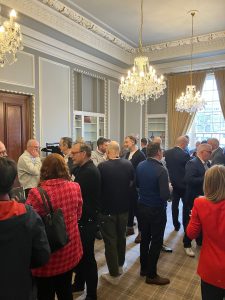
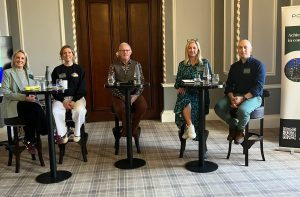
Poole Dick recently hosted its Question Time Breakfast Special at Manchester Hall, bringing together a panel of industry leaders and construction professionals from across the North West.
Set against a backdrop of strong regional growth, with economic performance and construction output outpacing the UK average, the discussion focused on a critical
question:
How can the North West deliver its blueprint for growth?
From housing delivery and skills to planning, infrastructure, and technology adoption, the session explored the key challenges and opportunities shaping the region. The aim was clear: to move beyond ambition and identify how growth can be delivered in practice.
The Panel
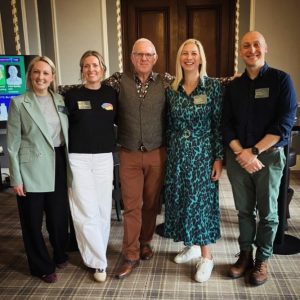
Stewart Grant (Chair) – Facilitator of the discussion, guiding a wide-ranging conversation across growth, delivery, and regional priorities in the built environment.
Angela Mansell – Managing Director of Mansell Building Solutions, bringing a strong delivery-led perspective focused on viability, collaboration, and real-world construction challenges.
Rachel Poole – Assistant Director at Deloitte, specialising in planning and regeneration across major mixed-use developments in Greater Manchester.
Michele Steel – Chief Executive of Regeneration Brainery, focused on social mobility, skills development, and broadening access to careers in the built environment.
Peter Bartley – Head of Sustainability at AEW Architects, working across low-carbon design, net zero strategy, and long-term building performance.
7 Key Takeaways from the Discussion
- The “new normal” is here — volatility must be designed into decision-making
- Growth is not the issue — deliverability is
- “Good growth” means projects that actually start and complete
- Too many schemes rely on perfect conditions that no longer exist
- Planning and delivery remain misaligned
- Skills are a pipeline and perception challenge — not just a shortage
- Collaboration — across sectors, disciplines, and regions — is critical to progress
Question Time Event Overview
There was no shortage of energy, opinion, or optimism at Poole Dick’s latest Question Time event. Opening the session, Managing Director Martin Brownsill set a confident tone, reflecting on a strong year of performance, continued investment in people, and a near 100% client satisfaction rate. It was a clear signal that, despite ongoing economic and geopolitical uncertainty, the sector is resilient and willing to move forward with intent.
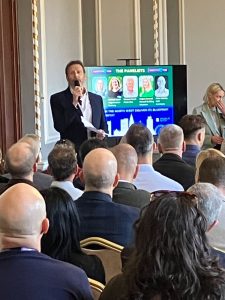
That balance between challenge and opportunity carried throughout the discussion. As Chair Stewart Grant framed the conversation, the context is unavoidable. Global instability, rising costs, and an increasingly complex regulatory environment are shaping how projects are brought forward. But rather than dwell on these pressures, the panel focused on how the industry responds.
As Angela Mansell put it early in the discussion:
“Welcome to the new normal.” It was a sentiment that resonated across the panel. Uncertainty is no longer a temporary disruption; it is the environment in which decisions must now be made. The implication is clear: projects must be designed to withstand that reality, not rely on ideal conditions that rarely exist.
This led directly into one of the most consistent themes of the morning: the gap between ambition and delivery.
There was broad agreement that Greater Manchester and the wider North West are performing strongly. Investment is flowing, governance is working effectively, and the region continues to lead outside London. As Rachel Poole highlighted, there is much to be positive about in terms of direction and intent.
However, the panel was equally clear that growth alone is not the challenge. As Angela Mansell noted: “Too many schemes only work in perfect conditions, and we don’t have that anymore.” That observation cuts to the heart of the issue.
Viability is tighter, margins for error are smaller, and projects are increasingly exposed to risk. In that environment, ambition must be grounded in realism. Which led to a simple but powerful reframing of the conversation: “Good growth is deliverable growth.” This is not about the scale of opportunity or the strength of the pipeline. It is about whether projects can realistically move from concept to completion. That requires a shift in mindset and one that brings delivery considerations into the earliest stages of planning and design.
A recurring frustration, raised particularly from a developer perspective, is that projects are still too often shaped around planning approval rather than practical delivery. This disconnect introduces inefficiencies, increases cost, and can ultimately stall progress.
Rachel Poole reinforced this from a planning standpoint, acknowledging both the intent and the complexity of the current system. Lengthy pre-application processes, significant documentation requirements, and resource constraints across local authorities and statutory consultees all contribute to delays. More effective early engagement and better alignment across stakeholders were seen as essential to improving outcomes.
Alongside this, the skills challenge remains a critical issue, but not in isolation. Michele Steel positioned this as a pipeline-and-perception challenge as much as a shortage. Whilst initiatives such as the Greater Manchester Regeneration Skills Academy are making progress, awareness remains limited and engagement from employers is inconsistent. There is also a need for the industry to better connect with younger audiences, particularly through platforms where they are already active.
Finally, sustainability was framed by Peter Bartley as a long-term responsibility that must be embedded from the outset. Whilst cost pressures are real, the consequences of short-term decision-making are becoming increasingly significant. A whole-life approach to value rather than a focus on upfront cost is essential if projects are to perform effectively over time.
Taken together, the discussion painted a clear and balanced picture. The opportunity for growth is real, and in many cases already underway. But the conditions for delivery have changed. The challenge now is not whether growth can happen, but how it is delivered in a way that is
realistic, resilient, and aligned across the industry.
Looking Ahead
The conversation made one thing clear: the ambition for growth is not in question. What matters now is how that growth is delivered through better alignment, stronger collaboration, and a more realistic, joined-up approach across the industry.
Over the coming weeks, we will explore each of these themes in more detail, from planning and delivery to skills, sustainability, and innovation, building a clearer picture of what a true “Blueprint for Growth” looks like in practice.
Over the coming weeks, we will explore each of these themes in more detail, from planning and delivery to skills, sustainability, and innovation, building a clearer picture of what a true “Blueprint for Growth” looks like in practice.
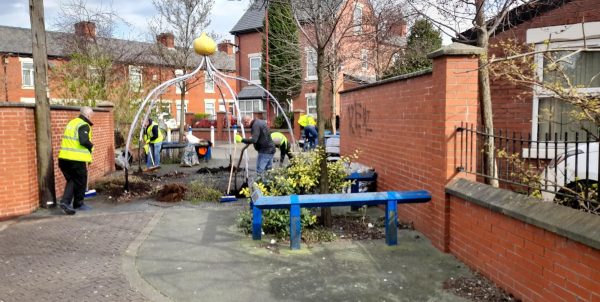
Creating cleaner spaces for Great Places Housing Group
Our team of volunteers helped Great Places Housing Group with their ‘Community Clean Up’ at Northmoor, Longsight, Manchester. Described as a “great success”, the clean…
Learn More

From Ambition to Action: Turning the North West’s Blueprint for Growth into Reality
Final Article in the Poole Dick Question Time Insights Series When Poole Dick hosted its Question Time Breakfast Special at Manchester Hall, the aim was…
Learn More
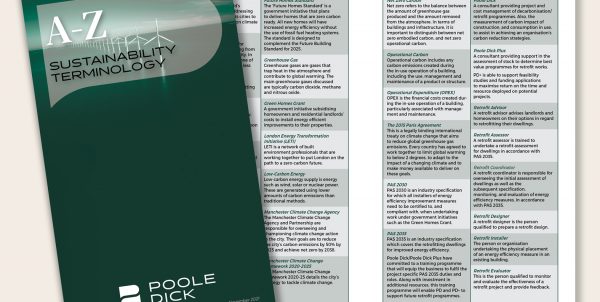
A-Z Sustainability Terminology Handout
Among the handouts that all our guests received at our net zero carbon event was our ‘A-Z Sustainability Terminology’ booklet. A guide, at a glance,…
Learn More